By Mike Lang
Grays Harbor News Group
Area students took time out of their summer last month to help establish a garden program at Elma Middle School and work at the aquaponics program at Elma High School.
Third-year agriculture teacher Katie Vetter says the idea for the garden began last year when students weren’t enjoying lunch.
“The original idea of this garden came when a group of students said they wanted to fix the lunch program,” she said. “They wanted more nutritious lunches. And it kind of snowballed from there. Ideally, yes, this garden will go to feed our students. But it won’t be next year.”
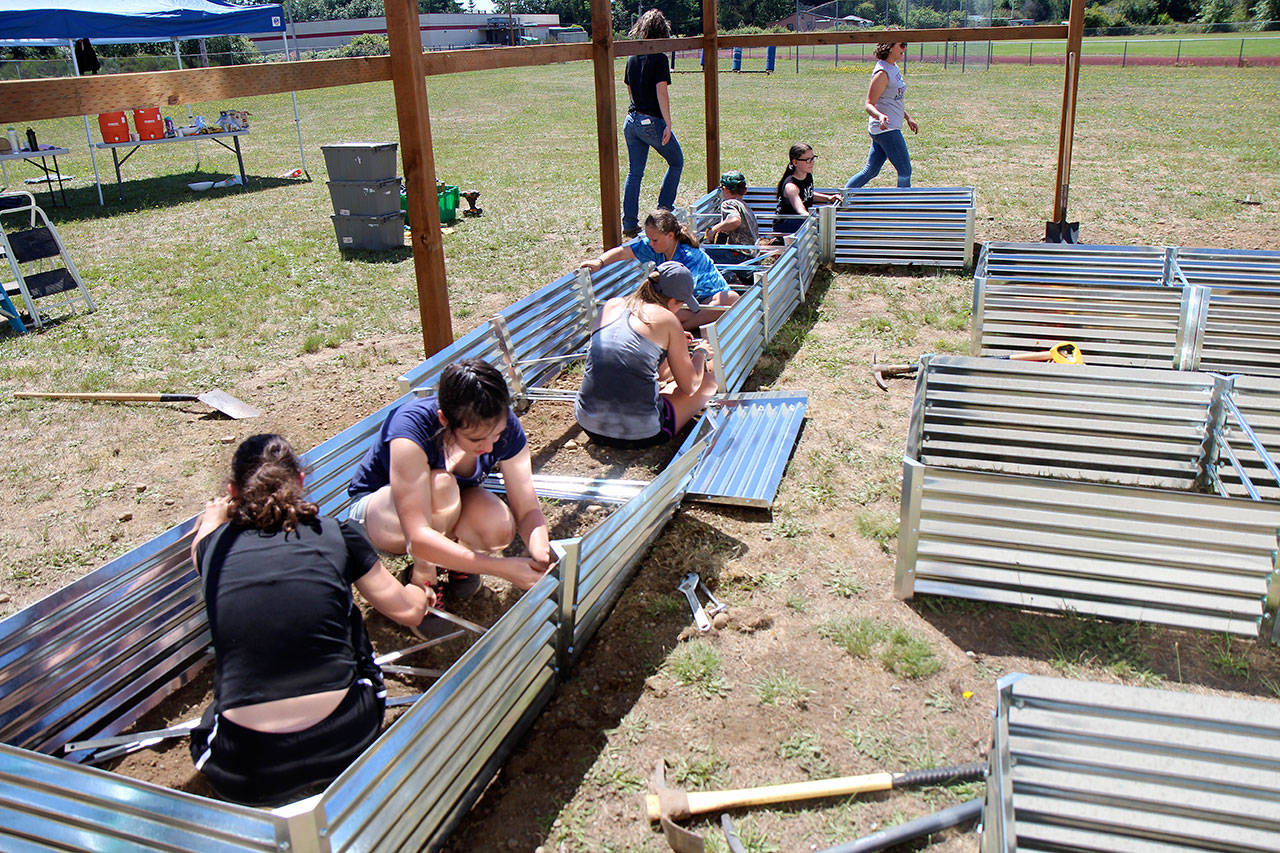
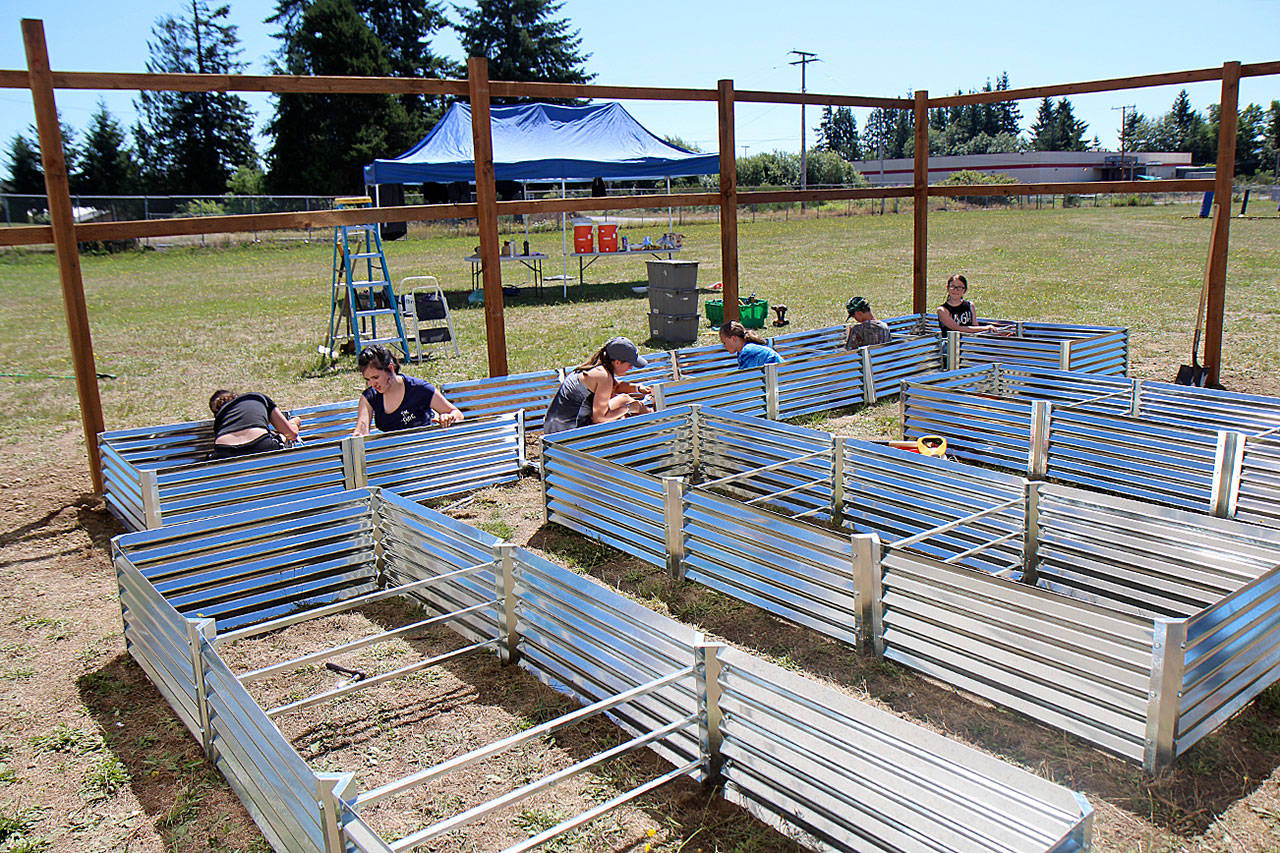
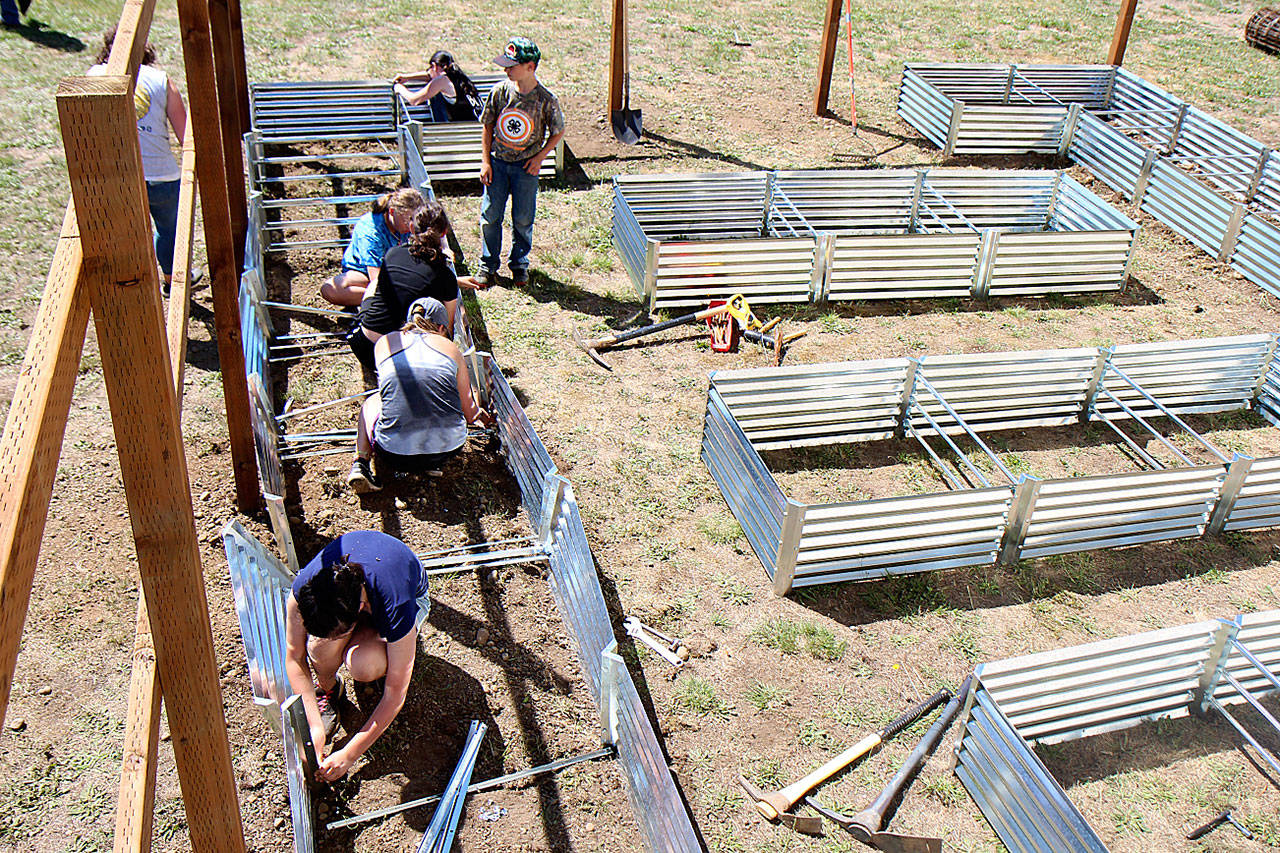
On July 25, teachers and students were putting together raised metal beds for the plants before building a door and encasing the garden in fencing.
Already, the students are learning to work together and communicate as they build the beds, Vetter said.
“The main goal is to educate people about gardening and to get fresher foods for the school lunches, make them more enjoyable,” ninth-grader Sylvia Burkhart said, “and include the ag classes in a big project that is going to help a lot of people throughout the years.
“We’re going to do some native plants and flowers. We’ll have some climbing plants along the back wall, like peas and greens.”
When asked about livestock, perhaps starting small with chickens, Sylvia was cautious.
“Keeping chickens — especially here, where there’s a lot of ways for coyotes to get in — is difficult because the chickens would be sitting ducks … or sitting chickens in this case,” she said.
The project already counts as community service that students could include on a resume or college application.
Funding for the program is through grants.
“We got a grant through the National FFA Organization program. We have a grant through the Northwest Farm Credit Services. And we’ve applied for another grant from FFA,” Vetter said. “We’ve had about $6,000 in grants so far and that’s what’s funded most of this piece and some for the aquaponics.”
The aquaponics program has evolved over the years. In February, the school received a shipment of 130 channel catfish.
On Thursday, teacher Ariel Finfrock and students Alley Ross and Kolton Morgan hoped to finish up connecting a new larger fish tank, settling basin and other piping to the plant beds. When it’s finished, they would move the catfish, which are about 3-inches long, into their new home.
“The big thing with aquaponics when you’re first getting going is waiting for the bacteria to build up because you need that bacteria to convert the fish waste from ammonia into nitrite then nitrate so that the plants can eat that form of nitrogen,” Finfrock said. “We’re getting to a good point now where the bacteria is built up. I think we might be ready to start adding more fish this year. And if we get a heating source in there, we can look at adding tilapia.”
The aquaponics system, like the garden, eventually will help feed the students. Romaine lettuce and several types of basil already are growing in beds, along with some other plants in deep-water raft and flood-and-drain beds built on site.
The greenhouse the program occupies used to house a trout and salmon rearing program
“With the demands of science standards and integrating our ag classes into fully credentialed science classes that count for college credit, it got harder to maintain those (fish),” Finfrock said. “Aquaponics is a little lower maintenance because the plants are cleaning the water that the fish live in. And then the fish are providing waste that is the food for the plants.”
When the fish grow too large, they will be used as a food source for the students as well.
The garden will be part of Vetter’s sustainable agriculture class for now.
“We would love to see it expand into the high school, middle school and alternative school,” she said.
If enjoyment is a prerequisite of expanding the program, they can cross that off their list.
“It’s fun, and I recommend it to anybody,” Alley Ross said.
Sixth-grader Tessa Landrs said she took part in the garden work week “because it looked fun.”
Grace Smith, who will be entering ninth grade next year won’t get a chance to work directly in the garden until the program expands.
“I think it’s cool that even though I’m not going to be here next year, the other students are going to get a chance to work in the garden that they wouldn’t get in other classes,” she said. “And at the high school, I can still be involved in it. It’s cool to see this much change at the middle school.”
Michael Lang | Grays Harbor News Group Students from Elma Middle and High schools finish up work on the last bed Thursday, July 25, in the new garden behind Elma Middle School. From left are Sylvia Burkhart, Mana Elliott, Grace Smith, Nevaeh Norris, Jesse Gagne and Tessa Landrs.
Students from Elma Middle and High schools finish up work on the last bed Thursday, July 25, 2019, in the new garden behind Elma Middle School. (Michael Lang | Grays Harbor News Group)
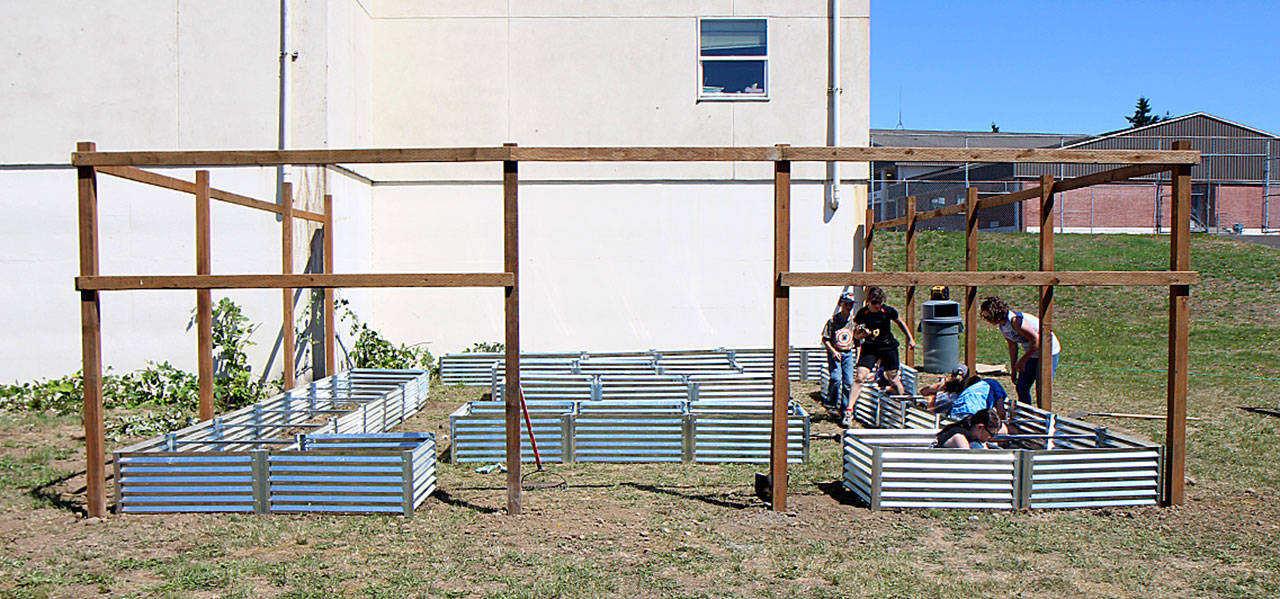
With the hard work of students and teachers, the new garden begins to take shape Thursday, July 25, 2019, behind Elma Middle School. (Michael Lang | Grays Harbor News Group)
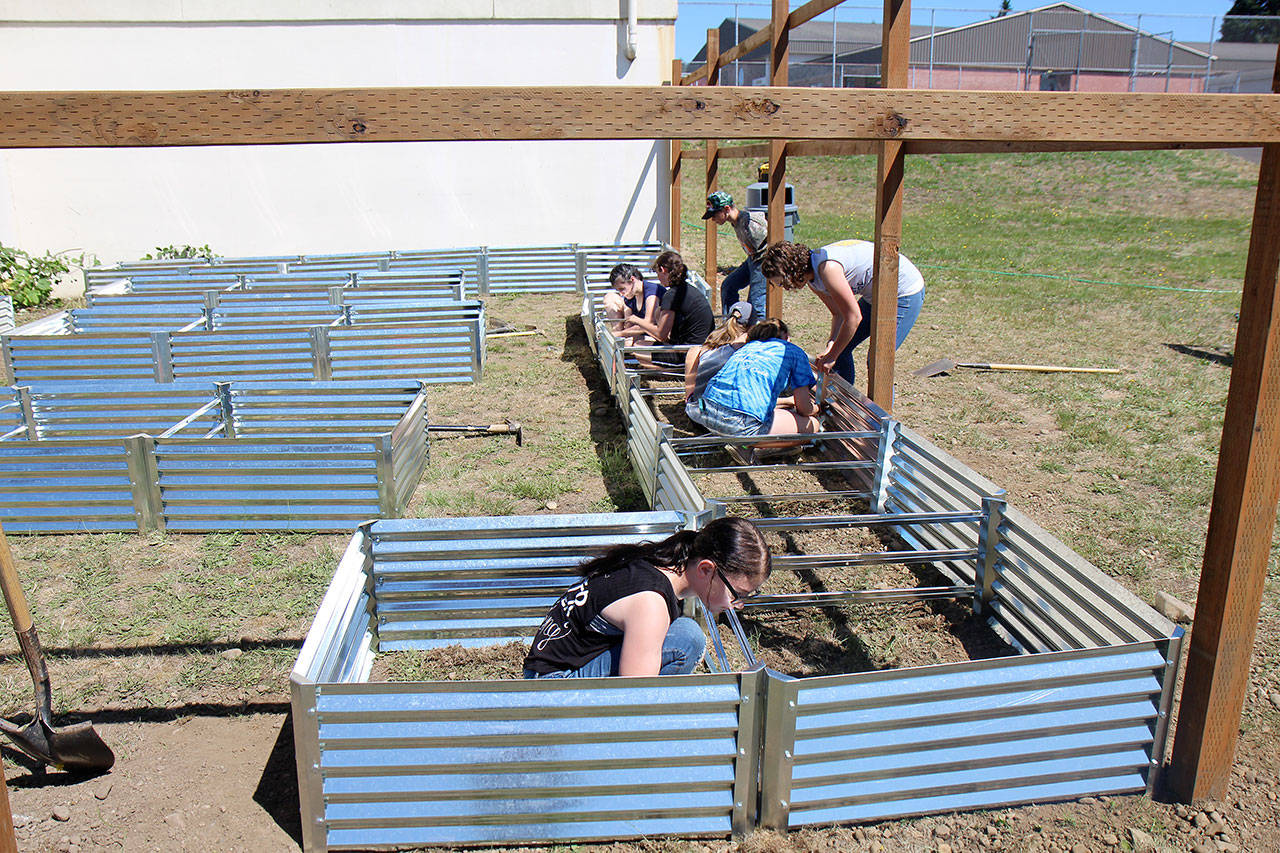
Students and a teacher from Elma Middle and High schools finish up work on the last bed Thursday, July 25, 2019, in the new garden behind Elma Middle School. (Michael Lang | Grays Harbor News Group)
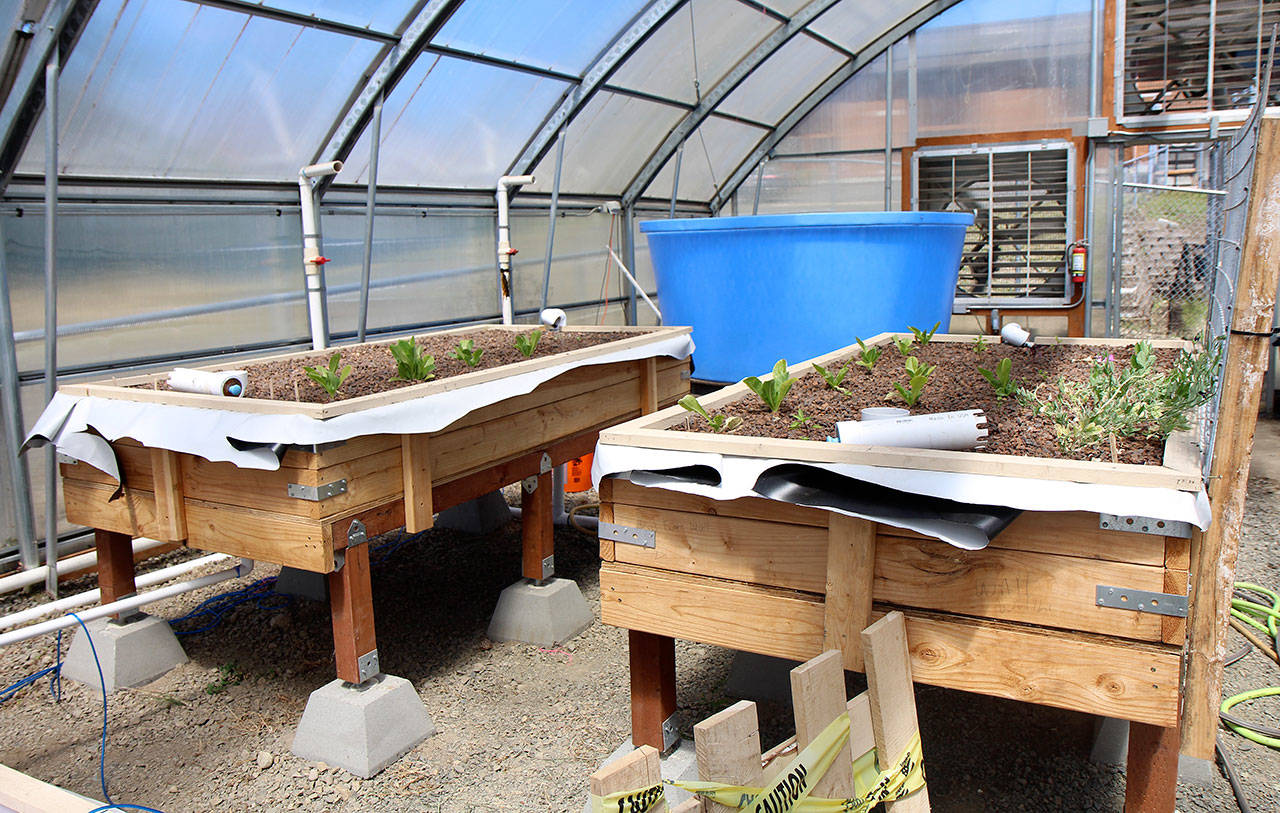
Water flows Thursday, July 25, 2019, from the fish tank (blue basin in back), floods these rock-filled plant beds then drains into the deep-water raft tank before returning to the fish tank in the aquaponics lab at Elma High School. (Michael Lang | Grays Harbor News Group)
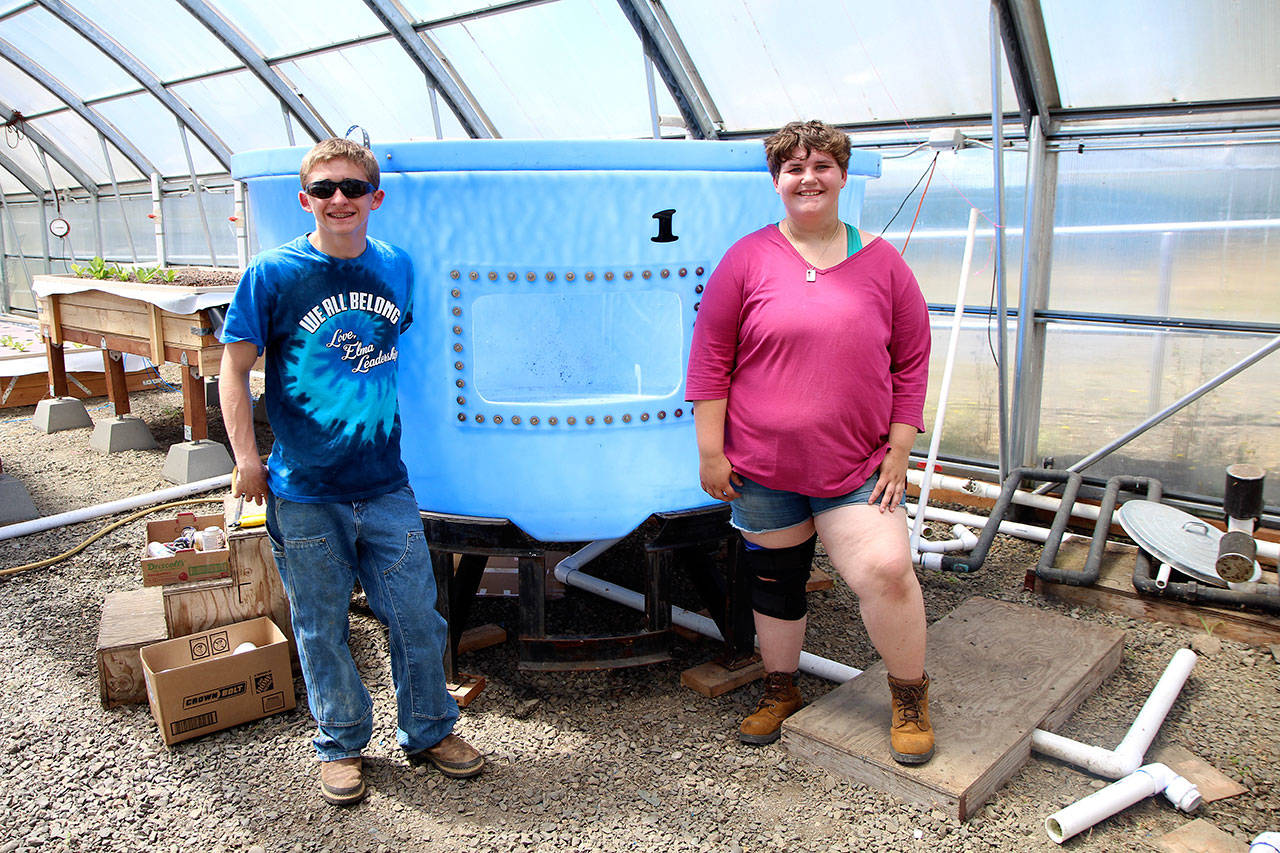
Photos by Michael Lang | Grays Harbor News Groups Elma High School senior Kolton Morgan, left, and sophomore Alley Ross stand Thursday, July 25, beside the tank that will hold about 130 channel catfish as part of the aquaponics lab at Elma High School.
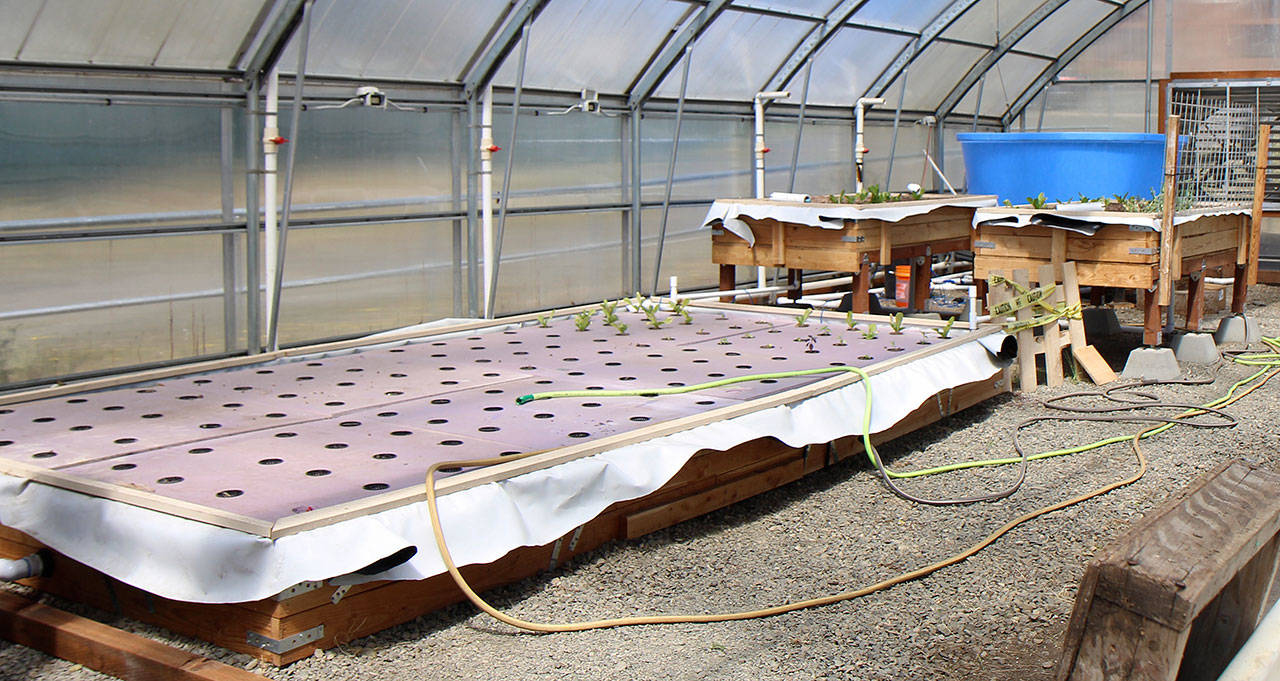
In the gravity-fed aquaponics lab at Elma High School, water flows from the fish tank (blue basin in back), floods rock-filled plant beds then drains into the deep-water raft tank before being pumped back into the fish tank. Photo taken Thursday, July 25, 2019 (Michael Lang | Grays Harbor News Group)
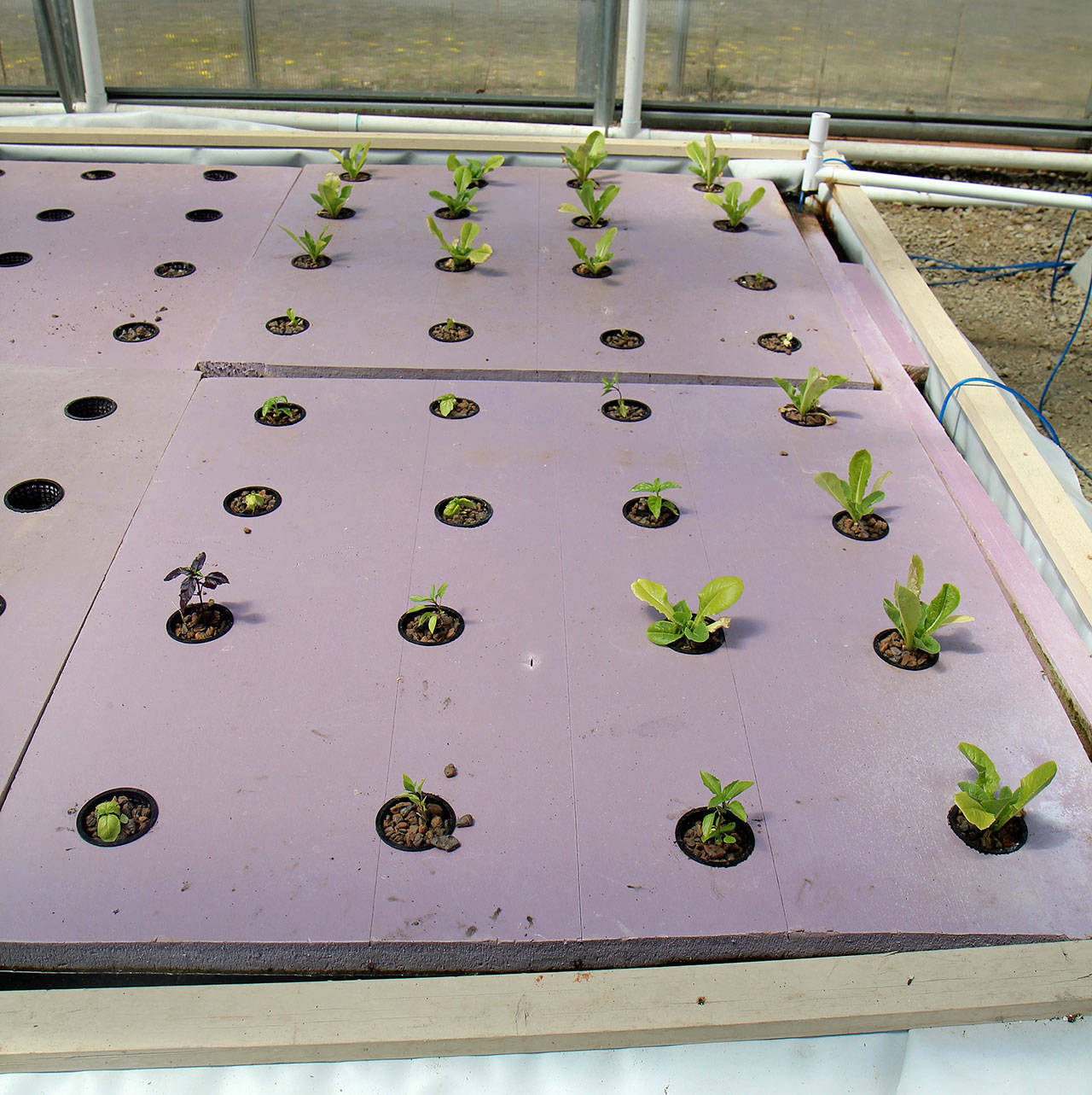
Romaine lettuce and several types of basil grow Thursday, July 25, 2019, in the deep-water raft in the aquaponics lab at Elma High School. (Michael Lang | Grays Harbor News Group)
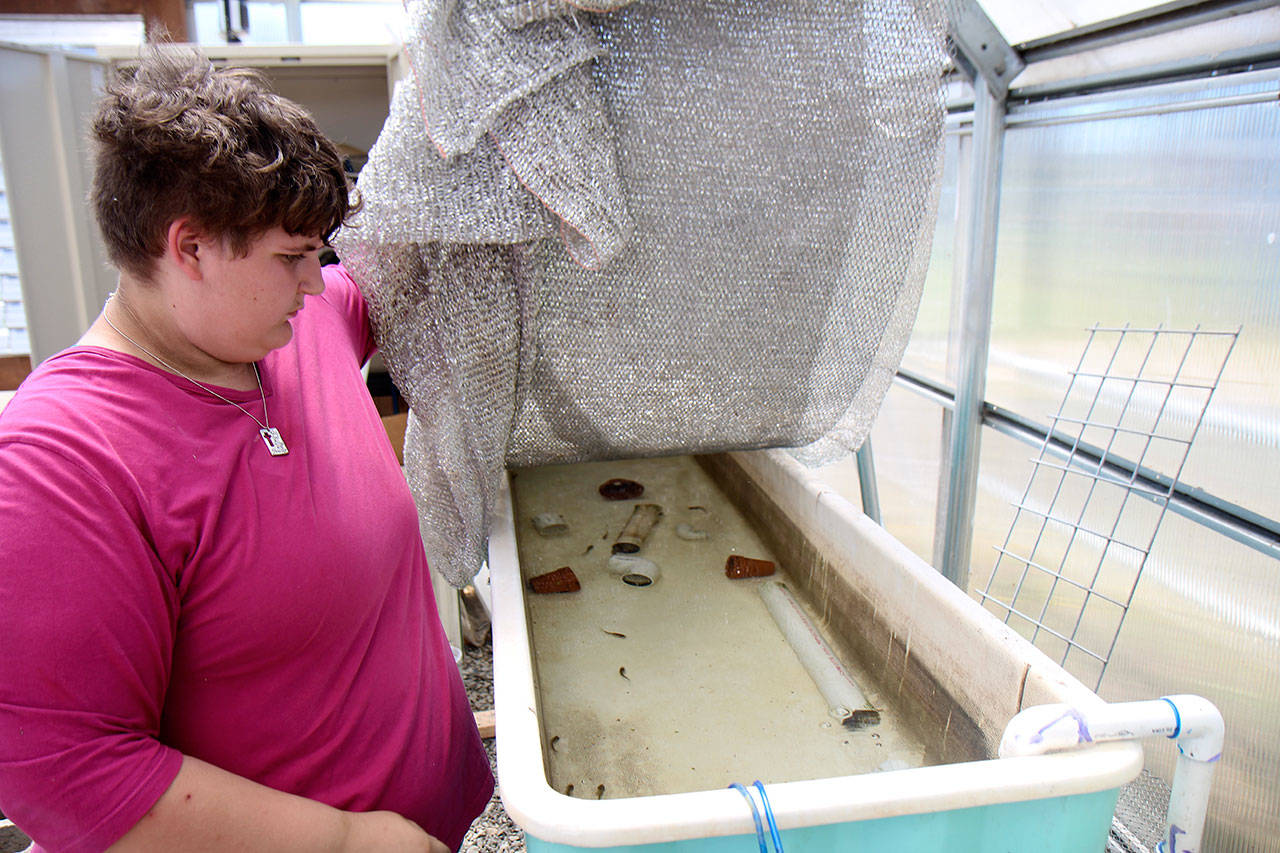
Alley Ross pulls the cover back on the nursery Thursday, July 25, 2019, to reveal a few of the 130 channel catfish in this aquaponics lab at Elma High School. (Michael Lang | Grays Harbor News Group)